

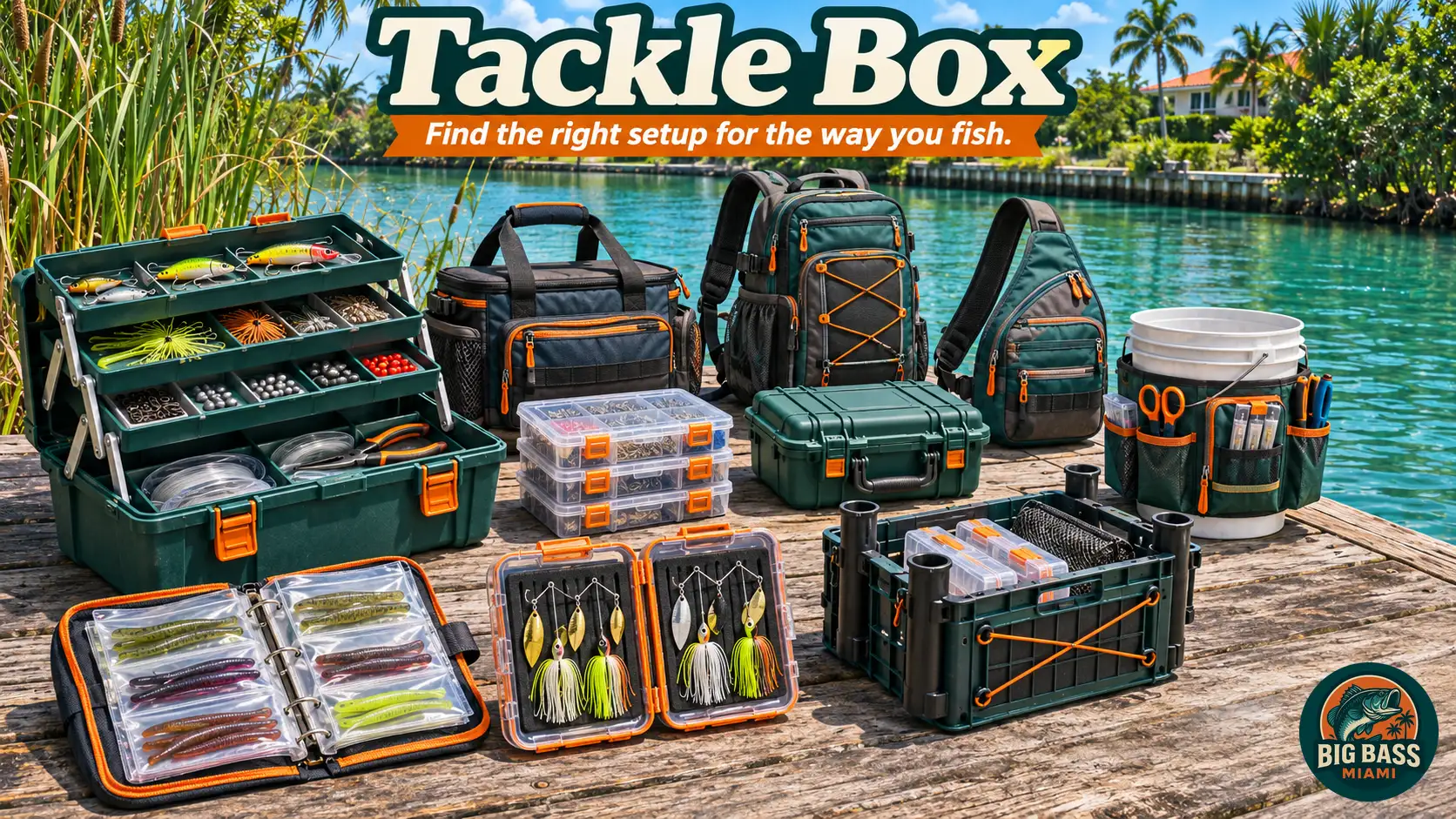
When the bite changes on a Miami canal, you want to find the right hook or lure and get back to casting. A small tray and worm wallet can cover a walk down the bank. A kayak calls for storage you can reach from the seat, while a bass boat gives you room to group trays by technique.
Use the comparison below to find a setup that fits the way you fish. Then look through the boxes, bags, packs, and organizers for ideas on keeping the tackle you reach for most close at hand.
Find the Right Tackle Storage for the Way You Fish
| Tackle Storage Type | What to Look For |
|---|---|
| Hard Tackle Boxes & Organizers | Removable trays and lidded compartments |
| Soft Tackle Bags & Bait Storage | Room for bait packaging and tools |
| Fishing Bags & Wearable Packs | Access while walking or casting |
| Specialty Tackle Organizers | Organization for hooks, jigs, weights, and tools |
| Bucket, Boat & Kayak Storage | Secure attachment and access from your seat |
Hard Tackle Boxes & Organizers

A traditional hard box keeps a mixed collection together. Cantilever trays open in layers so you can see several compartments at once. Removable utility trays make it easy to swap out gear before a trip. A sealed waterproof box gives items that need to stay dry a dedicated place.
Keep a tray for the rigs you fish most. A Texas-rig tray can hold hooks and bullet weights together, so you can move it from a hard box to a smaller bag for a canal walk.
Try sorting trays by technique so you can grab your worm rigs or hard baits in one move.
Soft Tackle Bags & Bait Storage

Soft bags hold utility trays with room for pliers, leader, and spare hooks. Worm holders, wallets, and binders keep soft plastics sorted in their original bags. For a short canal walk, a pocket kit with a few hooks, weights, and confidence baits may be all you need.
Sort soft plastics by shape or the rig you use them for. Keeping worms and creature baits in separate sleeves makes it easier to find a replacement without unpacking the bag.
Keep the colors you fish most in the front of the binder so you can find them quickly.
Fishing Bags & Wearable Packs

Shoulder bags and satchels give you side access. A sling swings forward to reach a tray. A backpack spreads the load across both shoulders, while chest and waist packs keep a smaller selection close at hand.
Try opening the main pocket from the position you’ll fish in. A sling that swings forward easily on the bank may feel different when you’re seated in a kayak.
Load a pack with the trays you actually carry and check whether the weight feels balanced.
Specialty Tackle Organizers

Give spinnerbaits room for their wire arms and separate jigs by weight or style. Use lidded compartments for small hooks and weights. Keep leader spools together and give pliers and cutters a spot you can reach quickly.
Set aside one small compartment for the hooks and weights you expect to use that day. Keep refill packs separate so the pieces you reach for first are easy to see.
Separate used lures from your main trays until you can dry them and put them away.
Bucket, Boat & Kayak Storage

A bucket organizer keeps tools together when you’re fishing from one spot. A secured kayak crate keeps trays behind your seat. On a bass boat, group onboard storage by technique so your worms, hooks, and bullet weights are together when you tie a Texas rig.
Put the day’s tray and pliers where you can reach them from the seat or casting deck. Store spare trays together so they stay out of the way until you need them.
Put the tray you reach for first at the top of the crate or compartment.
Pack for the Trip
For a canal walk, take a small tray, a worm wallet, and pliers. In a kayak, keep your most-used tray within reach and secure the rest. On a bass boat, organize by technique so you can grab a complete setup when the bite changes.
Keep Exploring Bass Class
Visit Boats for choosing a fishing platform. Then explore Rods, Reels & Line to put together an outfit, or Techniques & Rigs to plan your next presentation. Before you head out, check the Miami Bass Fishing Report for local conditions.