
A flash of gold beside a Miami canal can turn an ordinary walk into a fishing memory. Butterfly peacock bass bring a different look and character to South Florida freshwater fishing, and learning about them begins with a surprise: despite the name, they are not black bass.

A Cichlid With a Familiar Nickname
The butterfly peacock bass, Cichla ocellaris, belongs to the cichlid family. Florida bass and largemouth bass belong to the sunfish family. Sharing “bass” in a common name does not make these fish close relatives.
How Peacock Bass Came to South Florida
FWC introduced butterfly peacock bass into southeast Florida canals in 1984 to help control abundant introduced forage fishes, especially spotted tilapia, while creating fishing opportunities. Warm water is important to this tropical fish, and cold sensitivity limits its distribution. A canal elsewhere in Florida should not be assumed to hold peacocks simply because it resembles a Miami canal.

Two Species, Different Outcomes
Butterfly peacock bass (Cichla ocellaris) were not the only peacock species tried in Florida. Speckled peacock bass (Cichla temensis), also known as speckled pavon, were stocked too. USGS reports that the Florida speckled stocking involved approximately 110 fish, with the last releases in 1988. They failed to establish a self-sustaining population.
The successful South Florida fishery is the butterfly peacock fishery. The history of speckled introductions does not mean anglers should expect to encounter that species today, and unusual coloration alone does not confirm a speckled peacock or a hybrid. Compare identifying features and seek expert confirmation for an unusual catch.
Sources: USGS speckled pavon profile and Florida introduction history and FWC butterfly peacock profile.
The Status of the Speckled Peacock in Florida
Not an established Florida fishery. USGS classifies the Florida introduction of speckled peacock bass as failed. That is more precise than calling the species extinct in the state or assigning an unverified date to the last catch. The illustration here represents the species and its introduction history, not a fish readers should expect to catch in a Miami canal.
Harvest restriction. Florida Administrative Code Rule 68A-23.005(6)(d) states that no person shall kill or possess any speckled peacock bass. This is separate from the butterfly peacock harvest allowance and does not establish endangered-species status. Check FWC’s current freshwater regulations before fishing. Read the cited rule text.
Look-alike confusion. Body color and markings can vary, so spots alone are not proof of a speckled peacock or a hybrid. Photograph the whole fish and its identifying features clearly, and seek confirmation from FWC or a qualified fish specialist before making a species claim.
Identifying a Butterfly Peacock
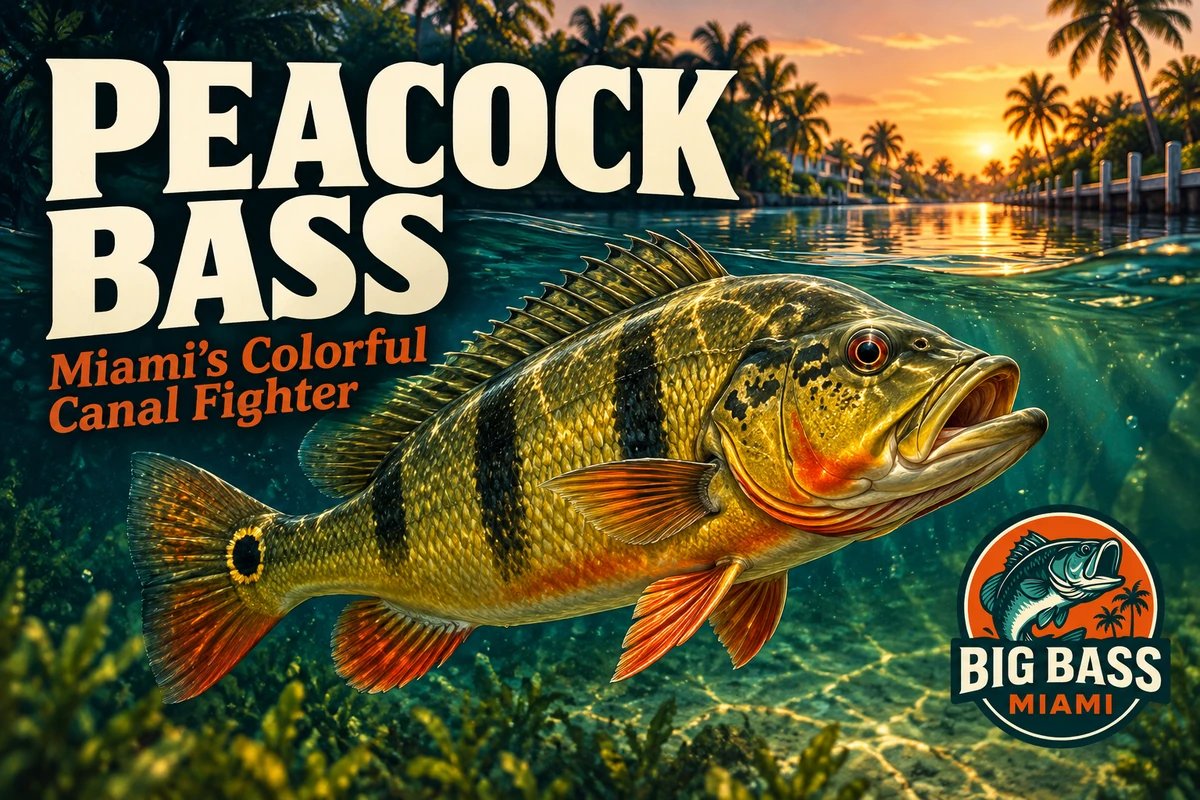
Look for a golden or yellow-green body, often with orange accents, dark vertical bars, and a black eyespot near the tail with a golden halo. Color and the strength of the bars vary. These markings give peacocks a very different overall appearance from the horizontal stripe and olive tones associated with black bass.


Canal Habitat and Behavior
FWC describes butterfly peacocks using warm canals, ponds, lakes, and other freshwater habitats. Shade, bridge areas, canal bends, and shoreline cover are features worth observing. Fish location changes, so familiar landmarks are starting points for learning rather than guaranteed holding spots.
Watch from a safe, permitted access point before moving close to the water. Clear water can make observation rewarding, but it also gives a reason to approach thoughtfully and avoid casting directly across another angler’s line.
Think Like a Fish-Eating Predator
Butterfly peacocks feed heavily on fish and commonly pursue prey during daylight. That helps explain the usefulness of fish-shaped presentations. It does not mean they are aggressive every day or immune to weather and temperature changes.
Fishing Approaches
Minnow-style jerkbaits, small crankbaits, and topwater presentations are among the artificial options described by FWC. Match the presentation to the space you can fish and retrieve it with control. A lure that imitates a small fish is a useful starting idea, not a guarantee.
A soft-plastic worm that works for black bass may not produce the same response from a peacock. Let that difference encourage observation rather than frustration. The two fish can share water while asking different things of an angler.
Respect the Fish and the Water
Prepare your landing and release before you cast. Keep handling brief, support the fish appropriately, and take discarded line and litter home. Explore the Bass Philosophy for the principles behind Big Bass Miami. Before fishing, check FWC’s current freshwater regulations and any rules specific to the water you visit.
Part of Miami’s Freshwater Story
Peacock bass are one reason a city canal can become a place of discovery. At Big Bass Miami, enjoying that opportunity goes alongside respect for habitat and care for each catch. Compare them with Florida bass and largemouth bass, or return to the species overview.
References: FWC butterfly peacock profile and fishing tips.
Explore This Learning Library
Get to know peacock bass, recognize useful habitat clues, and choose a practical approach for your next trip. Use these suggestions as starting points and adjust to what you observe.
Peacock Bass Reference
| Topic | Know the Fish | Find the Fish | Fish for It |
|---|---|---|---|
| Peacock Bass | Miami’s butterfly peacock, Cichla ocellaris, is a tropical cichlid rather than a black bass. | Look for vertical body bars and a dark tail spot with a yellow-gold halo. Color and bars can vary. | Plan around its fish-focused feeding habits and warm-water needs instead of treating it as a largemouth. |
| Canal Habitat | South Florida freshwater canals provide an important local fishery. Access and conditions differ between waterways. | Explore clear canal edges, structure, and places where small baitfish gather. | Approach quietly and make controlled casts from permitted, stable access. Follow visible feeding activity rather than covering water blindly. |
| Daylight Feeding | Peacocks typically feed during daylight. They can chase fish quickly when active. | Watch for baitfish scattering, visible follows, and surface activity along canal edges. | Try a fish-shaped lure with a lively retrieve, then vary pauses or speed if fish follow without striking. |
| Live Bait | Live shiners are an excellent choice for peacock bass and a useful starting point for anglers learning the fishery. | Present bait near visible fish or baitfish activity, keeping it clear of heavy snags. | Use legal live shiners, keep them lively, and watch the bait or float closely. Never release unused bait into the canal. |
| Artificial Lures & Soft Plastics | Peacocks generally favor live fish and fish-imitating lures; they rarely take the plastic worms commonly used for largemouth bass. | Choose a lure that resembles the small fish you see and can be worked cleanly around the cover. | Try jerkbaits, small crankbaits, topwater plugs, or jigs. Soft plastics are not categorically ruled out, but a slowly dragged worm is usually a less suitable starting point. |
| Cold Fronts & Responsible Fishing | Peacocks are sensitive to cold water. A warm afternoon does not necessarily erase a recent cooling trend. | Check recent weather and observe fish activity instead of relying on air temperature alone. | Set realistic expectations after cold fronts. Keep handling brief, support your catch, and return it promptly; avoid repeatedly targeting fish guarding nests. |
Related Lessons from the Journal
Explore stories and lessons connected to this subject.
-

My First Bass: The Bass Buster That Hooked Me for Life
My first largemouth came from a Miami Springs canal on a green Bass Buster Chummin’ Minnow. Its unforgettable Flavorol scent still brings back the…
-

Welcome to Big Bass Miami
Meet Peter Cardenas and discover the stories, fishing lessons, and respect for Florida’s waters behind Big Bass Miami.