
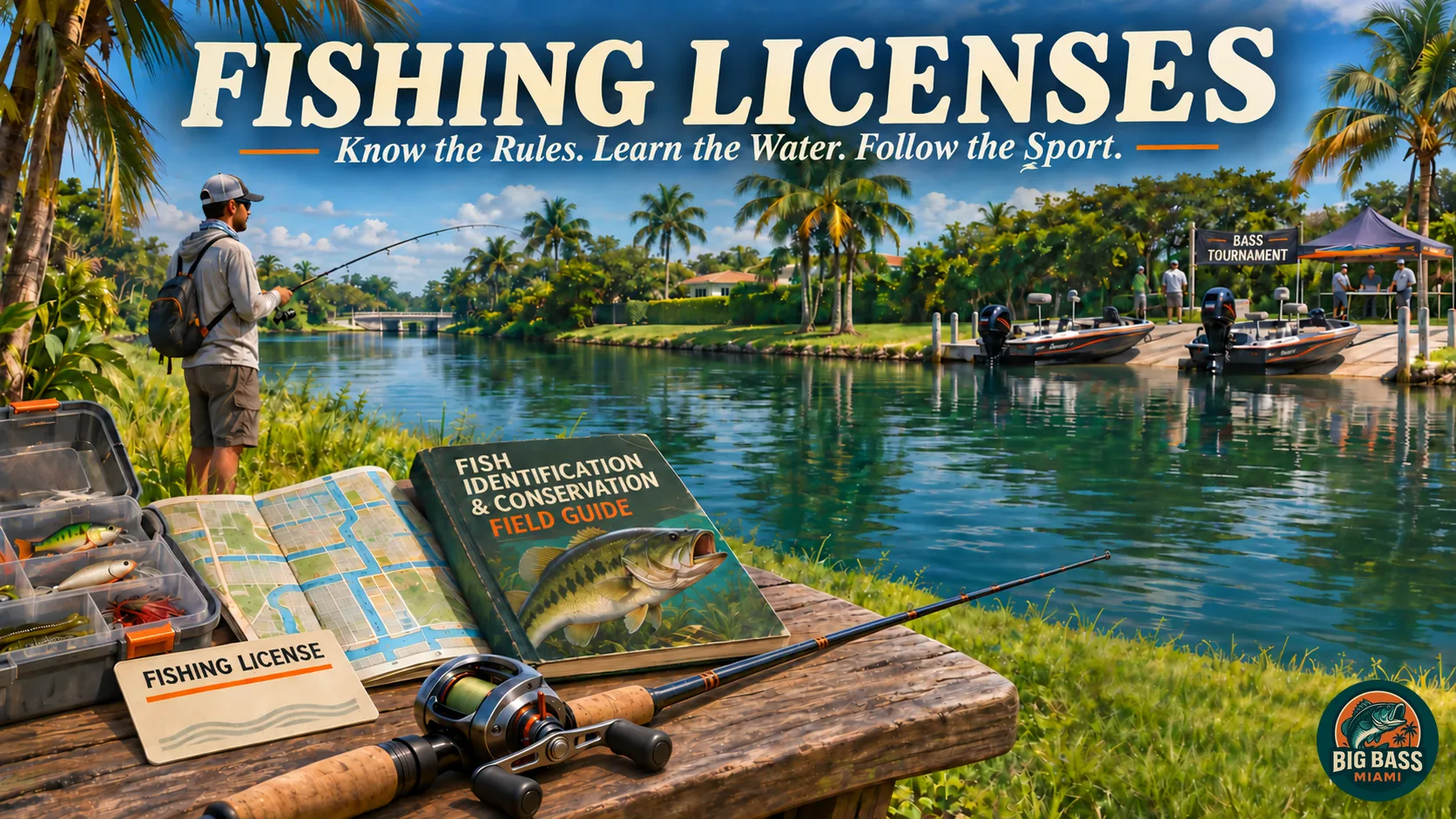
A good day of bass fishing starts before the first cast: get the right license, know your catch, and respect the water. This Bass Class guide covers Florida residents and visitors fishing for freshwater species.
What is FWC?
FWC is the Florida Fish and Wildlife Conservation Commission. It manages Florida’s fish and wildlife resources and enforces fishing and boating rules. Its website is the official place to check licenses, species rules, and waterbody exceptions.
Florida residents and visitors: which license?
Most Florida residents ages 16–64 need a freshwater fishing license unless an exemption applies. Nonresidents generally need one at age 16 and older. An out-of-state fishing license does not replace a Florida license. Catch-and-release fishing still requires a license unless you are exempt.
| Angler | Freshwater license | Base fee |
|---|---|---|
| Florida resident | Annual / five-year | $17 / $79 |
| Visitor (nonresident) | Annual | $47 |
| Visitor (nonresident) | 3-day / 7-day | $17 / $30 |
Processing or agent fees may apply. Check FWC’s current freshwater license options and fees before purchasing. Requirements follow the species you target, so saltwater fishing may require a separate license.
Where to buy your license
Florida residents can buy online through Go Outdoors Florida or use an authorized agent or tax collector. Have the identification needed to establish Florida residency ready.
Visitors buying a 3-day or 7-day license must purchase in person at a participating tax collector or authorized license agent. These short-term nonresident licenses have not been available online since November 7, 2025. Annual nonresident licenses remain available online. Check the official purchase options and agent locator before traveling, and confirm the location’s hours and services.
Keep your license ready—even without signal
Florida residents can keep their license on their phone in the Fish|Hunt FL app; this digital option is also available to visitors. FWC says licenses synced in the app count as personal possession. Sync before your trip, check the expiration date, and make sure the license opens before leaving coverage.
Our practical backup tip: save a clear screenshot showing your license details and validity dates, or carry a printed copy. Keep your phone charged and carry identification too.
Your driver’s license or state ID helps establish your identity and, for residents, residency. Keep your licensing account details accurate. Do not rely on an officer retrieving your fishing license from a driver’s license number: have your valid fishing license available to show. See FWC’s digital-license guidance.
Who may be exempt?
Children under 16 and Florida residents age 65 or older are among the exempt groups. Residents 65 and older should carry proof of age and residency. Being a visitor over 65 does not, by itself, provide the Florida-resident exemption. Other exemptions have specific conditions; review FWC’s complete exemption list. Exempt anglers must still follow fishing regulations.

Meeting an FWC officer
Be courteous and keep the interaction safe. Pause casting, keep hooks under control, and follow lawful instructions. Before reaching into a bag or pocket for identification or your phone, explain what you are getting. Have your license ready, cooperate with lawful checks, and ask questions calmly if a rule is unclear.
Know the fish before you keep it
Identify the species, measure it correctly, and check daily bag limits, possession limits, seasons, and special waterbody rules before harvesting. A license is permission to fish within the rules—not permission to keep every fish.
- Black bass: the general statewide daily limit is 5 combined, with only one 16 inches or longer. Florida/largemouth bass have no general statewide minimum length.
- Butterfly peacock bass: the general statewide daily limit is 2, with only one 17 inches or longer.
- Check your exact waterbody: special regulations can override these general examples. Confirm current FWC freshwater regulations before keeping fish.
Explore our Florida bass and peacock bass guides, and practice careful catch and release when returning fish.
Before your first cast
- Confirm your license or exemption and its valid dates.
- Bring identification, your accessible license, and an offline backup.
- Know your target species and the rules for your fishing spot.
- Pack a measuring tool and check limits before harvesting.
- Respect officers, other anglers, private property, and the fish.
License information and general limits checked November 4, 2026. Consult FWC for current rules and exceptions before fishing.