
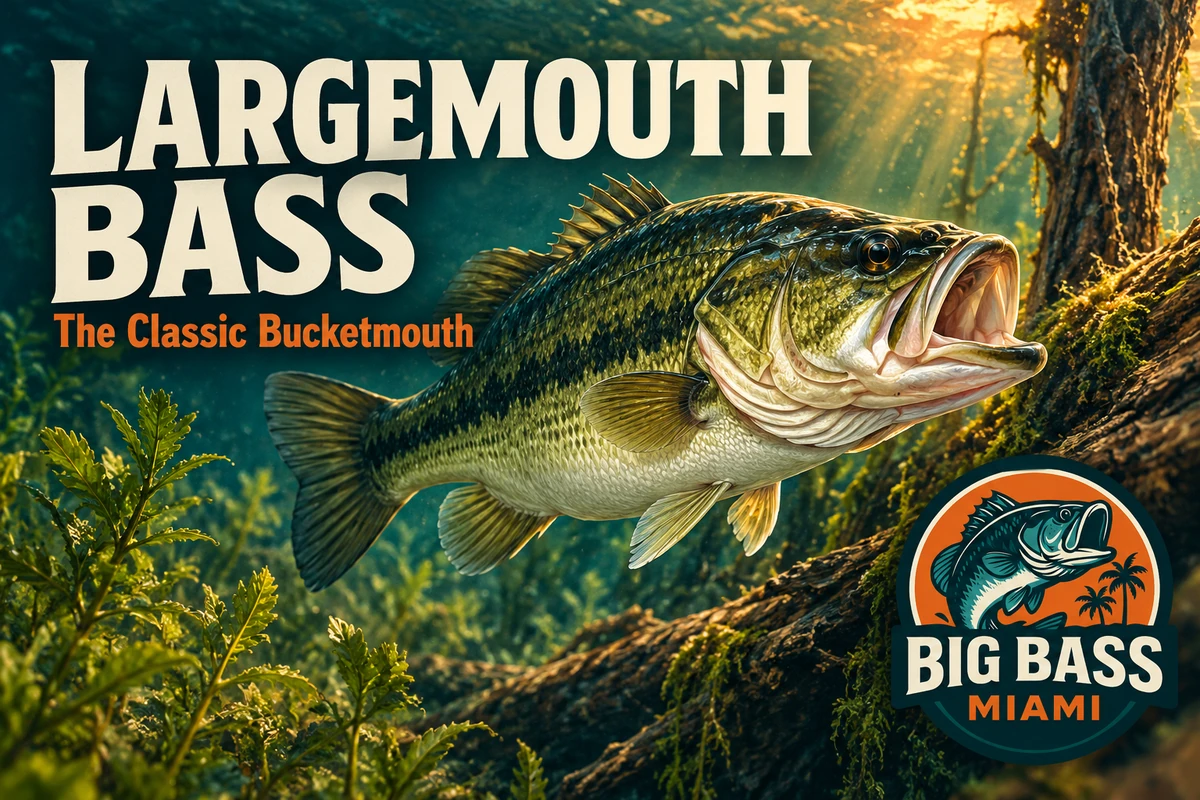
The largemouth bass is the classic bucketmouth of freshwater fishing: an olive-green predator associated with grass edges, submerged wood, and the possibility of a sudden strike. It is also a name that needs a little explanation in Florida, where older terminology remains common.

Which Largemouth Are We Talking About?
Under the naming adopted by FWC, largemouth bass is Micropterus nigricans, while Florida bass is Micropterus salmoides. Older references often apply Micropterus salmoides to largemouth bass more broadly. When comparing articles, look at the date and how the author uses the names.
A fish casually called a largemouth in South Florida may be a Florida bass. This guide keeps separate pages so readers can understand the distinction without pretending every catch can be identified from a quick glance.
Recognizing the Bucketmouth
The broad mouth, olive coloration, pale underside, and dark horizontal side marking form a useful starting picture. Color varies with conditions, and Florida bass have a very similar appearance. Do not use size, aggressiveness, or how hard a fish fights as proof of species identity.


Largemouth Bass Habitat: Cover and Structure
Largemouth bass use freshwater environments including lakes, ponds, reservoirs, and slow-moving river areas. Cover such as vegetation and fallen timber can offer concealment; underwater contours and depth changes create another set of features worth learning.
For an angler, this means observing a location before rushing to cast. Where can prey move? Where does shade fall? Is there a clear route to land and release a fish? Good questions give the next cast a purpose.
What Do Largemouth Bass Eat?
Fish, crayfish, and other available prey help support largemouth bass. They can use cover to ambush food, but their position and activity change with conditions. A familiar-looking bank does not promise the same bite on every visit.
Building a Simple Approach
Learn a few presentations well before filling a tackle bag with alternatives. A soft plastic offers one way to examine a small area; a suitable moving lure offers another way to search open water and edges. Choose tackle you can control around the cover you are fishing.
Vary your retrieve thoughtfully. A missed strike or contact can be a reason to reconsider the angle, speed, or depth, rather than immediately changing everything. Keep observations about the water and presentation alongside any notes about your catches.
Florida Bass or Largemouth Bass?
These closely related black bass deserve more than a side-by-side color guess. Their naming history is the main reason this section exists. Use the Florida bass page for the local context, and rely on expert identification when a precise species determination matters.
Respect the Fish and the Water
Prepare your landing and release before you cast. Keep handling brief, support the fish appropriately, and take discarded line and litter home. Explore the Bass Philosophy for the principles behind Big Bass Miami. Before fishing, check FWC’s current freshwater regulations and any rules specific to the water you visit.
Continue with Understanding Bass or meet the very different butterfly peacock bass.
Reference: FWC’s Florida bass and largemouth bass naming explanation.
Explore This Learning Library
Get to know largemouth bass, recognize useful habitat clues, and choose a practical approach for your next trip. Use these suggestions as starting points and adjust to what you observe.
Largemouth Bass Reference
| Topic | Know the Fish | Find the Fish | Fish for It |
|---|---|---|---|
| Largemouth Bass | A black bass called Micropterus nigricans under current FWC naming. It closely resembles Florida bass. | Learn the waterway and consult current references; color, size, and a casual photo may not establish the species. | Use the same careful observation of cover, prey, and depth that you would for other black bass. |
| Habitat & Cover | Vegetation, shade, and submerged structure provide useful starting points for locating bass. | Look along plant edges, logs, docks where access is permitted, and transitions from shallow to deeper water. | Cast alongside edges to keep your lure in the target area longer. Choose a rig you can retrieve through the cover. |
| Feeding Activity | Black bass take a variety of prey, so several lure styles can be useful. Their response can change within a trip. | Watch for baitfish, surface movement, and repeated activity near a particular piece of cover. | Start with a presentation you can control. If fish follow or strike short, compare retrieve speed, pauses, or lure size. |
| Soft Plastic Worms | Plastic worms are a dependable option for black bass, especially when a slower presentation fits the cover. | Explore vegetation pockets, bottom transitions, and cover you can reach from stable footing. | Try a weedless Texas rig around vegetation. Let the worm sink, move it deliberately, and watch for line movement during pauses. |
| Live Bait & Moving Lures | Live shiners and fish-imitating lures provide alternatives to slowly worked plastics. | Look for baitfish activity near open edges and cover. | Keep live bait supervised. With artificial lures, compare steady retrieves with pauses while keeping your lure clear of snags. |
| Light & Weather | Shade and light change through the day; a front or water-level change can alter the area you can fish effectively. | Check shaded cover and nearby depth rather than assuming midday or a sunny day is unproductive. | Adjust location, depth, or retrieve one at a time. Follow the Seasons & Conditions guide for heat, storms, and shoreline safety. |
Related Lessons from the Journal
Explore stories and lessons connected to this subject.
-

My First Bass: The Bass Buster That Hooked Me for Life
My first largemouth came from a Miami Springs canal on a green Bass Buster Chummin’ Minnow. Its unforgettable Flavorol scent still brings back the…
-

Welcome to Big Bass Miami
Meet Peter Cardenas and discover the stories, fishing lessons, and respect for Florida’s waters behind Big Bass Miami.