
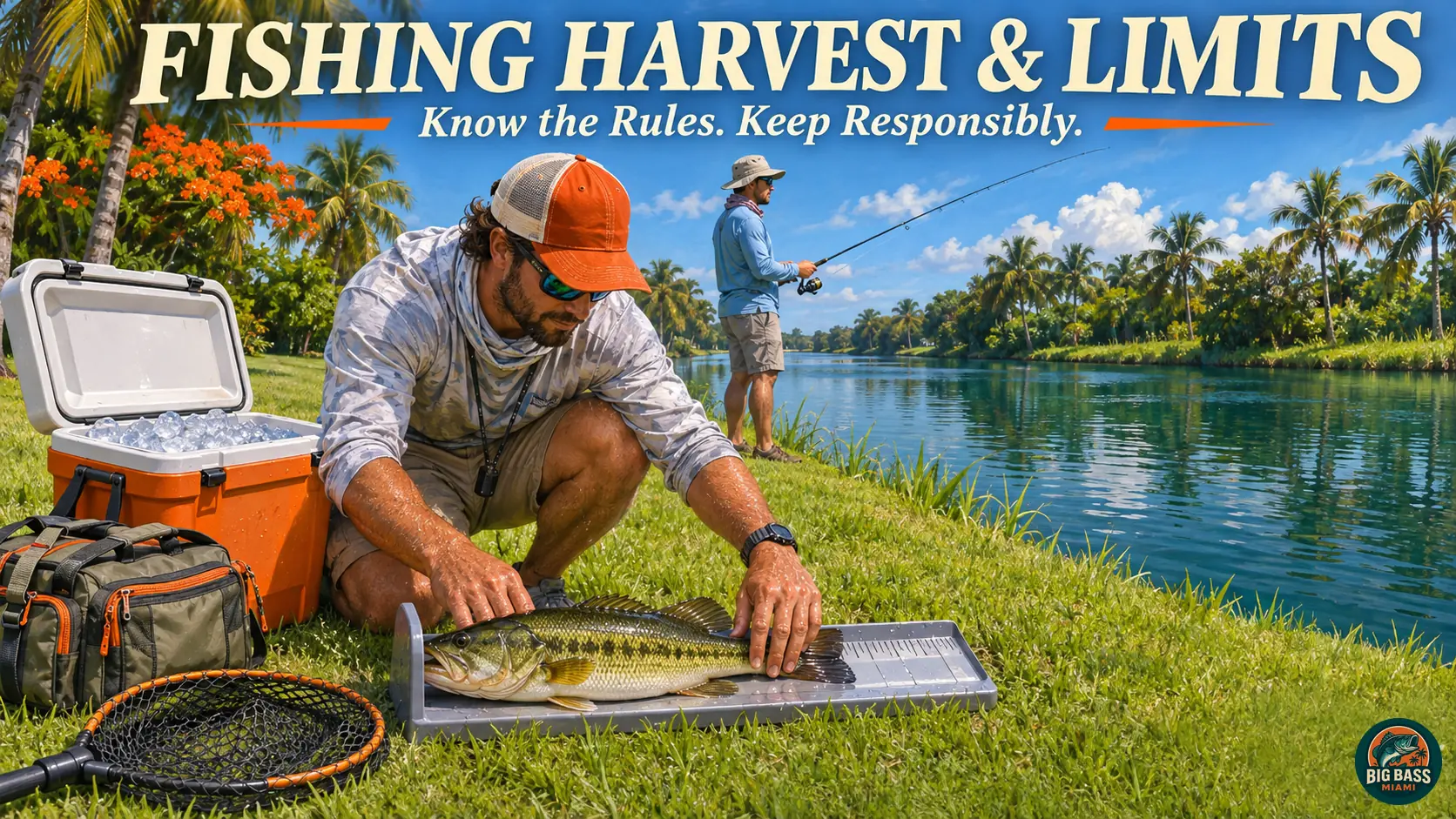
Know the Rules. Keep Responsibly.
A good day on the water can end with a photo, a release, or a meal. Keeping a legal catch is part of fishing, too. The responsibility comes in knowing which fish you have, what the rules allow, and whether that fish belongs in your cooler.
This guide focuses on freshwater bass fishing around Miami and South Florida. Use it to plan your trip, then check the official rules for the water you will fish. A statewide limit does not replace a special local restriction—and a legal fish is not automatically a good choice to eat.
Rules checked November 4, 2026. Regulations and health advisories can change; follow the current official guidance.
Before the Cooler: Understand the Limits
- Daily bag limit: The number of fish an angler may legally take in one day. Some species share a combined limit.
- Possession limit: The number you may have in your possession, which can include fish from more than one day.
- Length restrictions: Rules that control which sizes you may keep. These may include minimum lengths, protected size ranges, or a limit on larger fish.
- Special waterbody rules: A lake, canal, river, or Fish Management Area may have restrictions that differ from the statewide summary.
Decide what you plan to keep before you begin. Bring a measuring board, check the relevant rules, and keep a running count of your catch. Each angler has an individual limit; fishing with friends does not turn those limits into one shared allowance.
South Florida Bass: What Can You Keep?
| Fish | Statewide daily limit | Length rule |
|---|---|---|
| Florida bass and largemouth bass | 5 black bass combined, including other black bass species | Only 1 may measure 16 inches or longer. No statewide minimum length for Florida or largemouth bass. |
| Butterfly peacock bass | 2 | Only 1 may measure 17 inches or longer. |
Florida bass and largemouth bass do not each receive a separate five-fish allowance. Their catches count toward the same combined black bass limit. Butterfly peacock bass have their own limit.
The general freshwater game-fish possession ceiling is two daily limits, subject to applicable exceptions and local rules. Read the FWC statewide bag and length limits and full freshwater regulations before keeping fish. These two bass entries are a starting point, not a complete list of Florida fish regulations.
Identify First. Measure Second. Decide Third.
Do not guess at a species or round a borderline measurement in your favor. If you cannot confidently identify a fish or confirm that you may keep it, release it promptly.
For total length, place the fish flat on its side on a wet measuring board. Close its mouth against the zero stop, pinch the tail together, and read the farthest tail tip. Measure straight along the board rather than following the curve of its body. See FWC’s measuring guidance.
Have your board ready before landing the fish. If you will release it, work quickly, use wet hands, and keep it off dry grass, hot pavement, and dry towels. Support its weight without forcing the jaw open.

Your Fishing License Comes Before the First Cast
Unless an exemption applies, you need the appropriate Florida fishing license to fish—not just to keep fish. Catch and release does not remove that requirement. Check FWC’s license requirements and exemptions before your trip.
Visitors age 16 and older generally need a Florida license; an out-of-state license does not cover fishing here. Nonresident three-day and seven-day licenses remain available, but since November 7, 2025, those short-term licenses must be purchased in person through participating agents or tax collectors. Visitors are not required to buy a full year simply because they are visiting. See visitor requirements and the official short-term license update.
A license supports more than a legal day of fishing. License revenue helps fund fishery management and conservation work that keeps those opportunities available.
Legal to Keep Does Not Mean Safe to Eat
A clear-looking canal does not tell you what is in its fish. Neither does a fish’s healthy appearance. Check consumption advice for the species and waterbody before deciding to take fish home.
Use the Florida Department of Health fish consumption advisories. Pay attention to meal guidance and advice for children and people who are pregnant or may become pregnant. Ocean fish also have advisories; saltwater alone is not a guarantee of safety.
Harvest limits protect fisheries. Consumption advisories address eating risks. You need to consider both. If you cannot find enough information to make a confident choice, enjoy the catch and let it swim.
If You Keep It, Take Care of It
Bring a clean cooler with enough ice before you start fishing. Harvest only fish you intend to use, dispatch them promptly and humanely, and chill them without delay. Keep food, bait, dirty equipment, and cleaning tools separate.
Keep bass intact while you are still fishing: FWC prohibits filleting black bass and peacock bass, or removing their heads or tail fins, until fishing is finished for the day. This allows identification and measurement. Review the official handling and possession rules when planning your trip.
Clean your catch with clean equipment and safe water, then keep it chilled during transport. Do not leave fish warming in a bag on the bank or in a hot vehicle.
Leave the Bank Better Than You Found It
Your trip is not finished when the cooler closes. Secure hooks, packaging, food scraps, and discarded line so they cannot blow away. Take fish waste home for appropriate local disposal rather than leaving it beside a canal, boat ramp, or fishing spot.
Never feed fish scraps to alligators or other wildlife. Keep your attention on the shoreline while handling a catch, and do not climb down an unsafe bank just to save a photo or a fish.
A Limit Is a Maximum—Not a Goal
You do not have to fill a cooler to have a successful trip. Keep only what you will use and leave room for the next angler’s experience. Releasing a healthy bass gives it another chance to grow, reproduce, and become somebody else’s unforgettable catch.
Explore Respect the Fish, Catch and Release, and Leave No Line Behind for more ways to care for your catch and your fishing spot.
Make the Bass Philosophy a part of every fish you keep—and every fish you release.