

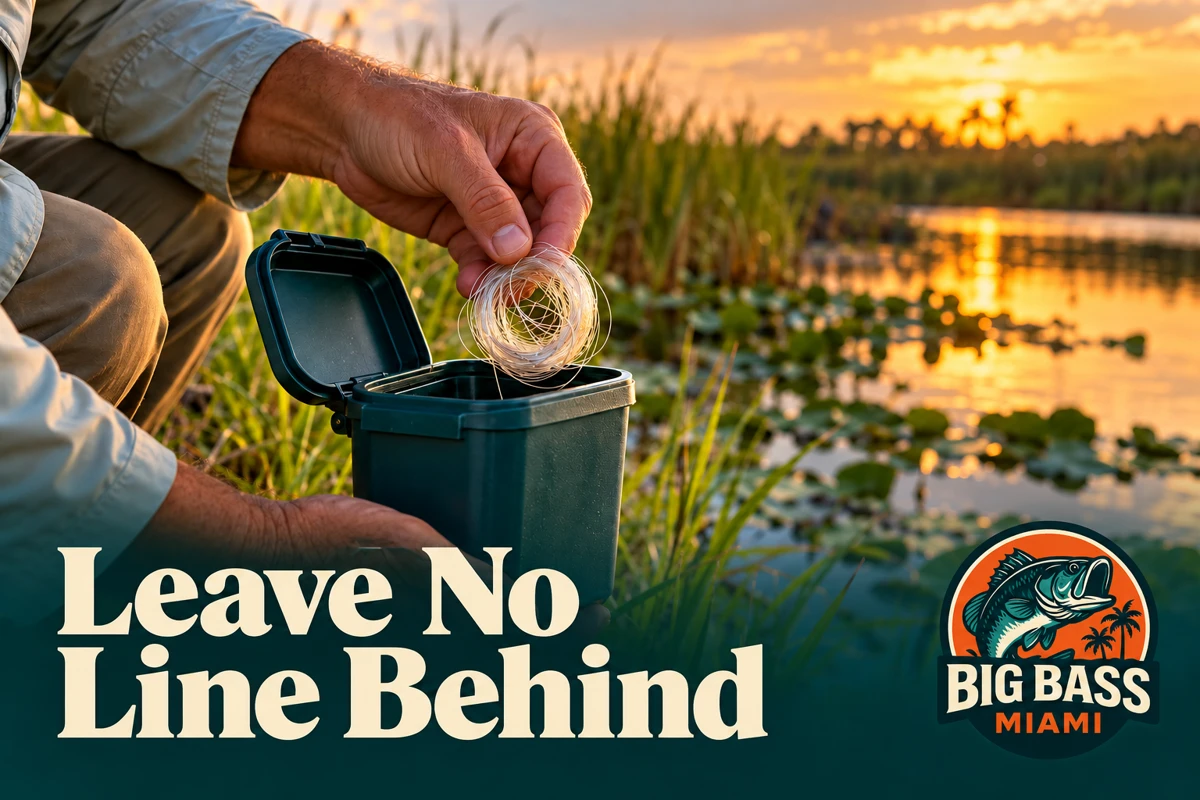
You retie a lure, trim the tag end, and make another cast. It’s a small part of the day—until that little piece of line falls into the grass.
Every piece we cut needs somewhere to go besides the bank or the water.
Discarded fishing line can entangle birds, turtles, and other wildlife, causing injury and suffering. It also leaves persistent plastic in the environment.
Change Starts with the Scraps We Notice
We may not always have thought about the tag end we dropped or the tangle we walked past. Some of us have left line behind ourselves.
We can admit that and change what happens on the next trip.
Keep a closed container with your tackle and put cut pieces straight into it. Show another angler how you collect your scraps. Small habits become more common when people see them practiced.
Give Used Line a Place in Your Tackle Bag
Bring a secure container for tag ends, worn leaders, and line removed from your reel.
Put pieces away immediately rather than leaving them on the ground to collect later. Wind can carry loose line away before you notice.
When replacing a full spool of line, contain it as you remove it.
Look Beyond Your Own Tackle
Before leaving, check around benches, railings, shoreline plants, and the place where your gear rested.
Collect discarded line only when safe. Don’t pull blindly on a tangle; hooks may be hidden inside. Never climb into unsafe vegetation or enter dangerous water to retrieve a snag.
If line is attached to wildlife, seek help from an appropriate wildlife-response service rather than pulling on it.

Cut Line Before Putting It in the Trash
Carry scissors when replacing reel line. Long strands and loops remain an entanglement hazard if they escape from a trash bag.
For line going into the trash, gather it into a manageable bundle and cut through both ends of the loops. Check for remaining long strands and cut them into pieces shorter than 12 inches.
Work over a container so the scraps cannot scatter. Secure every piece in a closed bag and place it in a covered trash bin.
Shorter pieces reduce entanglement risk, but they are still plastic waste. Cutting the line does not make it harmless or acceptable to leave behind.
Use the Right Recycling Bin
A designated fishing-line collection bin is different from household recycling.
Follow the collection program’s instructions. Suitable monofilament and fluorocarbon can go to participating fishing-line recycling programs; braided line, hooks, lures, and packaging do not belong in those bins.
Keep recyclable line contained until you reach an appropriate collection point.
If the Bin Is Full, Take Your Line Home
I’ve seen fishing-line recycling bins that were already full and appeared overdue for collection. Adding another bundle can leave loose line hanging out or falling onto the shoreline.
If a bin is full, overflowing, or damaged, don’t force line into it or leave it beside the container.
Take it home in your own closed container. Use another maintained collection point, or follow the cutting and secured-trash instructions for disposal. If possible, tell the site manager the bin needs attention.
Finish with One Last Look
Before leaving:
- Collect line scraps from your tackle area.
- Secure old line removed from your reel.
- Separate accepted recyclable line from braid and tackle.
- Check that nothing can blow out of your bag or vehicle.
A clean bank protects wildlife and welcomes the next angler. Make checking for line as routine as checking for your keys.
Make the Bass Philosophy a part of how you leave the shoreline.
Tight Lines and Good Times!