
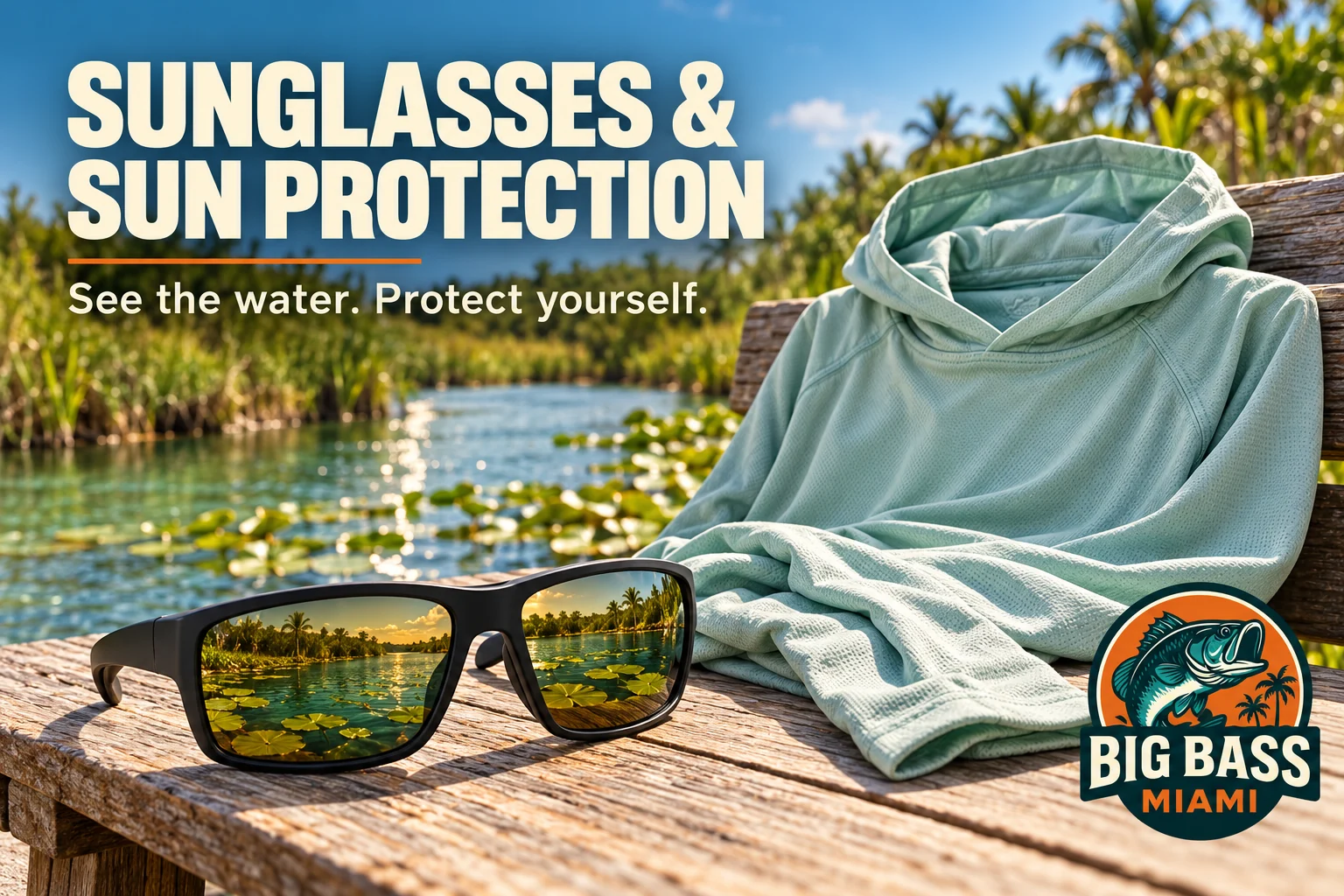
Fishing sun protection starts before the first cast. On South Florida canals and lakes, hours of casting can add up to a lot of UV exposure—even when clouds or a breeze make the day feel comfortable.
Sun protection helps reduce sunburn and long-term skin damage while protecting your eyes. Build a simple routine around UV-protective sunglasses, comfortable clothing, sunscreen and shade breaks. Start before the first cast so you can focus on the water.
Protect your eyes and cut the glare

Polarized: less reflected glare
Polarized lenses filter reflected glare from surfaces such as water. That can make the view more comfortable and help reveal details beneath the surface.
UV400: protection from UV
Look for a label stating UV400 or 100% UVA and UVB protection. Polarization alone does not provide UV protection, and a dark tint is not proof of it.
Choose both features. A comfortable wraparound frame can also reduce light entering from the sides. Price and mirrored finishes do not replace checking the protection label.
Use polarized lenses to read the water

A bright reflection can hide the very edge you want to fish. Reducing that glare can help you look for submerged grass, changes in the bottom, openings beside cover and fish moving through clearer shallows.
- Scan before you cast. Look along the shoreline and outside edge of the vegetation.
- Look for shapes and movement. A shadow or brief change in outline may deserve a second look.
- Change your viewing angle. Take a small step along a stable bank rather than leaning over the water.
- Watch your lure. Where visibility allows, follow its path past grass and cover.
Polarized glasses do not make muddy water clear or guarantee that you will spot fish. Depth, water clarity, surface chop, shade and sun angle still affect the view. Do not approach an unsafe bank or an alligator to get a better look.
What to look for in fishing sunglasses

| Feature | What to check | Why it helps |
|---|---|---|
| UV protection | UV400 or 100% UVA/UVB protection on the label. | Protects your eyes from ultraviolet radiation. |
| Polarized lenses | An explicit polarized-lens specification. | Reduces reflected glare on the water. |
| Fit and coverage | Secure, comfortable frames with good side coverage. | Keeps glasses in place while casting and limits light entering around the frame. |
| Retaining strap | A comfortable eyewear strap that fits securely onto your frames. | Lets you take your sunglasses off and hang them around your neck, reducing the chance of dropping them in the water or leaving them behind. Check the attachments before fishing; a strap does not guarantee against loss. |
| Daily care | Follow the maker’s cleaning instructions; carry a lens cloth and protective case. | Keeps the view clear and protects the lenses between trips. |
Clean the lenses, not with your shirt
It is tempting to wipe away sweat or water with a shirt hem, but fabric and trapped grit can scratch lenses and damage surface coatings over time. Avoid shirt sleeves, paper towels and tissues. Follow your eyewear maker’s instructions: rinse away loose grit first, use a lens-safe cleaner approved for your lenses and gently dry with a clean microfiber lens cloth. Keep the cloth clean and store your glasses in a protective case.
Mirror and anti-reflective coatings can be damaged by improper cleaning. UV protection and polarization may be built into the lens or its layers rather than applied as an exposed coating, so construction varies between glasses. If a coating starts peeling or the lenses become badly scratched, consult the manufacturer about repair or replacement.
Lens-care guidance: Costa: caring for polarized sunglasses.
The lightweight hooded fishing shirt

The modern fishing sun hoodie combines long sleeves, a hood and lightweight fabric without the bulk of a sweatshirt. Some styles also include a built-in face covering or neck gaiter that pulls up for additional coverage. Look for a comfortable design that stays in place without blocking your vision, and check the UPF rating for the areas it covers. You can choose a solid color or a fishing print; coverage, fit and the protection stated on the label matter most.
Look for a labeled UPF rating—ideally UPF 50 or 50+. UPF 50 fabric blocks about 98% of ultraviolet radiation under its test conditions. A shirt that feels thin, cool or breathable is not automatically UV protective.
| Shirt feature | What to look for |
|---|---|
| Sun protection | A clearly stated UPF rating from a reputable manufacturer. |
| Coverage | Long sleeves and a hood that covers the neck comfortably. Some UPF fishing shirts have thumb holes: slip your thumbs through to help keep the sleeves extended over the backs of your hands. Fingers and any other uncovered skin still need sun protection. |
| Summer comfort | Lightweight, breathable, quick-drying fabric with room to move and cast. |
| Fit and care | A relaxed fit that does not pull the fabric tight. Follow washing instructions and the maker’s guidance about wet or stretched fabric. |
A hood helps cover the neck, but it leaves parts of the face exposed. Pair it with suitable headwear and sunglasses, and protect any uncovered skin.
Cover the gaps: hats, neck gaiters and sun gloves

Once you have your shirt and sunglasses, consider the areas still exposed while you cast, reel and walk the bank. Choose accessories with a stated UPF rating, ideally 50 or 50+, and a fit you can comfortably wear throughout the trip.
| Item | How to use it on the water |
|---|---|
| Wide-brim hat or cap | A wide brim all around shades your face, ears and neck. A fishing cap is another option, but leaves the ears and neck exposed; add coverage with a hood or gaiter and sunscreen where needed. |
| Neck gaiter | This tube-shaped fabric cover slips over your head to cover the neck and, depending on its design, parts of the face and ears. Choose a breathable UPF-rated version that stays in place without blocking your view. Ordinary thin fabric is not automatically sun protective. |
| Sun gloves or hand covers | Lightweight UPF fishing gloves cover the backs of your hands. Fingerless styles make tying knots and working a reel easier, but exposed fingers still need sunscreen. Look for comfortable coverage where gloves meet your sleeves. |
| Optional long pants | Long pants are optional, but lightweight styles are recommended along grassy banks, especially when mosquitoes are active around South Florida and the Everglades. They also help shield your legs from grass brushing and scratching against them. Watch for spiders and webs stretched between grass stems, and choose a clear path instead of pushing through vegetation. Pants provide an extra barrier, though mosquitoes may still bite through thin fabric. For sun protection, look for a labeled UPF rating. |
Sunscreen, lip protection and shade breaks

Clothing leaves some skin uncovered, so keep sunscreen in your fishing kit. Choose a broad-spectrum, water-resistant SPF 30 or higher; SPF 50+ is a good choice for a long day outdoors. Lotion makes it easy to spread an even layer. Apply generously before heading out, following the product label.
Remember the places anglers often miss: ears, the back of the neck, exposed fingers, the backs of the hands and the tops of the feet. Use an SPF 30+ lip balm for your lips. Reapply sunscreen about every two hours outdoors and after swimming or sweating, following the label; remember your hands again after washing them. Water resistant does not mean waterproof.
Plan shade breaks, especially around midday. Shade helps, but reflected UV from the water can still reach you. Cloudy or cooler conditions also call for protection.
Hydration & food for longer trips

Pack plenty of drinking water and other suitable fluids, with extra in case you stay longer than planned. Keep drinks within easy reach and take regular hydration breaks. If you will be out for a while, bring snacks or a meal, and keep perishable food chilled in a cooler. Prepare for the time you expect to spend on the bank or boat, including the walk back.
Check the UV meter in the weather dropdown before your trip. Its daily peak forecast helps you prepare for the day; it is not a live UV measurement at your fishing spot.
A banana in the cooler? Cue the fishing jokes.
The old “no bananas” superstition is best known on fishing boats, where bananas get blamed for bad luck and slow bites. On the shoreline, consider it material for friendly teasing: “Packed a banana? Keep track of your bites—we may have found today’s excuse!” It is fishing folklore, not a rule or a proven cause of poor fishing. Enjoy your snack, and pack out the peel with the rest of your trash.
Keep learning: Bass Environments · Seasons & Conditions · Miami Bass Fishing Report