
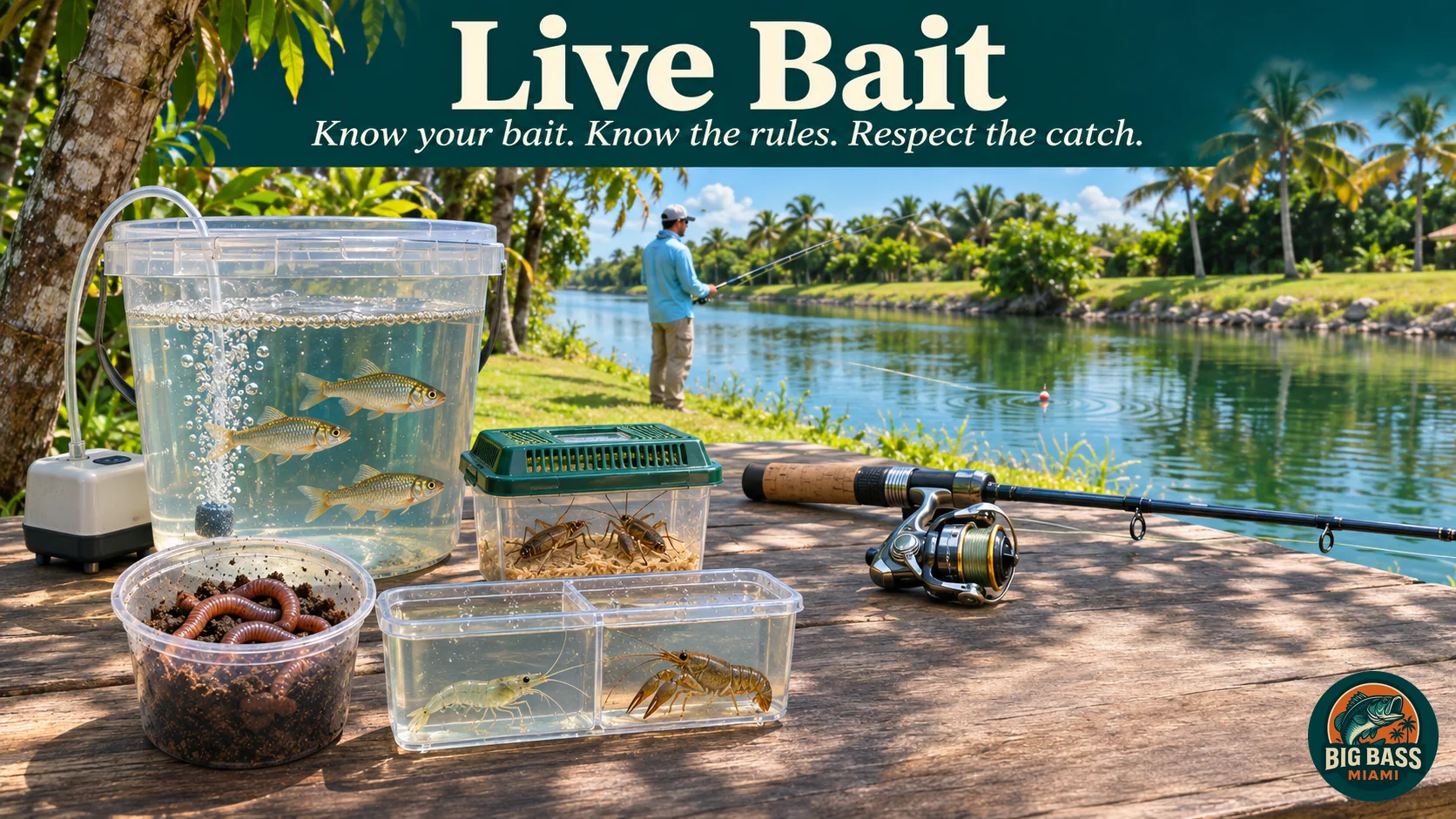
From the bait shop to the canal bank: choose the right bait, know what you caught, and fish responsibly.
Sometimes the most convincing presentation is something that already swims, crawls, or wriggles. Live bait brings its own movement to the water, and it can make fishing approachable for a beginner or give an experienced angler another option when the bite is difficult.
Around South Florida, the choices go well beyond a cup of worms. Shiners, small baitfish, grass shrimp, crayfish, and legally caught panfish all deserve a closer look. But choosing live bait also means understanding collection rules, caring for it, and avoiding the spread of unwanted species.
Florida rules checked November 4, 2026. Verify current species and waterbody restrictions before collecting or using bait.
Choose Your Bait for the Fish You Want
| Bait | Where to find it | Where it fits |
|---|---|---|
| Golden shiners | Bait shops; lawful local collection | A leading live-fish choice for Florida/largemouth and peacock bass. |
| Other identified bait minnows | Bait shops; lawful collection | Match size to your target. “Minnow” is a shop label, not a species identification. |
| Earthworms and nightcrawlers | Shops; collection where permitted | Versatile natural bait; useful for mixed catches, especially panfish. |
| Red wigglers and smaller worms | Shops; permitted collection | Good for small hooks and catching panfish. |
| Crickets and insect larvae | Shops; permitted collection | Primarily panfish options rather than the first choice for targeting large bass. |
| Freshwater grass shrimp | Some shops; lawful local collection | Small natural forage suited to light tackle and panfish. |
| Crayfish | Some suppliers; lawful collection after identification | A natural bass forage option; check species and movement restrictions. |
| Bluegill and other eligible panfish | Personally caught legally; limited aquaculture exception | A regulated fish-bait option, not something to keep from a cast net. |
| Nonnative canal fish | Species-specific rules apply | Identify first; never assume an invasive fish can go in a live bait bucket. |
For a first trip specifically targeting bass, start with legally sourced shiners. For a relaxed outing with children or a mixed catch, worms and small hooks are a practical introduction. Not every bait listed here is equally effective for every species.

Shiners & Bait Minnows
Both wild-caught and farm-raised golden shiners enter the bait trade; those descriptions refer to their source, not different species. Smaller golden shiners often look silvery, while larger fish may develop more golden sides. Fathead minnows are a separate species. Ask the supplier which fish you are buying rather than relying on the word minnow or the fish’s color.
Golden shiners are a classic live bait for Florida and largemouth bass. Fish them beneath a float or let them swim on a free-lined presentation when conditions allow. FWC’s bass fishing guidance identifies golden shiners as a leading live-bait choice.
They are also an excellent place to start with peacock bass. These fish favor live fish and fish-shaped presentations. FWC recommends live shiners in its butterfly peacock fishing tips. Do not expect a worm-based panfish setup to be the best match for a fish-eating peacock.
Ask the shop what species it is selling, which sizes are available, and how to keep that batch healthy. Choose a bait size your tackle can cast gently and your target can reasonably take. A bigger bait is not automatically a better bait.

Worms, Nightcrawlers, and Red Wigglers
These are real worms, separate from the soft-plastic worms in your tackle tray. Nightcrawlers are larger; smaller earthworms and red wigglers fit neatly on light panfish tackle. You can buy them in cups or collect worms where digging and access are permitted.
Use a whole worm or a manageable section, with the hook point clear. Keep the container shaded and follow the supplier’s storage directions. Avoid leaving it in a hot car or letting the bedding dry out.
Worms are especially useful for bluegill and other panfish, even though bass may also take them. FWC’s bluegill profile recommends live worms or crickets. Think of worms as a versatile way to enjoy a mixed catch rather than a guarantee of a trophy bass.

Crickets, Mealworms, and Other Insects
Crickets and mealworms give anglers additional small-bait choices. Some shops also stock other insect larvae. Availability changes, so ask what is intended for fishing and how it should be stored.
These baits fit best in a panfish-focused outing. Present them on appropriately small hooks beneath a light float or near the bottom. If collecting insects yourself, get permission and avoid pesticide-treated areas. Do not collect protected wildlife or release purchased insects outdoors.

Freshwater Grass Shrimp and Crayfish
Freshwater grass shrimp are small forage animals that work with delicate tackle. Crayfish offer a different shape and movement and are part of the natural forage picture for bass. Neither should be confused with an unrestricted license to move aquatic animals around.
Identify what you have before keeping it. Check collection permissions and species rules, and ask suppliers about lawful use and care. This guide does not recommend moving wild crayfish between waters or substituting saltwater shrimp for freshwater bait care.

Can You Use Bluegill as Bait?
Yes, with conditions. FWC allows an angler to use personally caught panfish as sportfishing bait with rod and reel or pole and line. Collection must be lawful, with applicable harvest limits observed. Purchased panfish qualify only under the exception for fish under four inches raised by a licensed aquaculture facility. Game fish caught in bait nets or traps must be released immediately. See FWC’s bait rules.
Bluegill are native game fish, not interchangeable with every small fish you see along a canal edge. Learn their identifying features and use a small hook and worm to catch them legally. Do not call every juvenile sunfish a bluegill.
Personally catching an eligible bait fish is different from buying wild-caught game fish from someone else. If you cannot confirm the source or species, choose a straightforward bait-shop alternative.

Invasive and Nonnative Fish: Identify Before You Use
South Florida canals hold Mayan cichlids, several tilapia species, and other introduced fish. Bass may eat small fish found around them, but a predator’s diet does not determine what anglers may legally possess or use.
Nonnative does not always mean invasive, and rules vary by species. For example, Mayan cichlids and spotted tilapia need separate identification. Spotted tilapia are prohibited species and cannot be kept alive by ordinary recreational anglers. Do not place them in a live bait bucket. Consult the current prohibited species list rather than treating every tilapia alike.
This draft intentionally does not recommend an invasive fish as a ready-to-use live bait. Confirm possession, collection, use, and transport requirements for the exact species first—even when planning to fish at the same canal.
FWC prohibits transporting live nonnative fish to or between waters for bait, except variable platys and fathead minnows. Live goldfish and carp are prohibited as bait. Black bass and peacock bass, including their parts, cannot be used as bait.

Not Everything Is Fair Game for Bait
A bass might eat it. That does not mean you are allowed to use it. People sometimes ask about frogs, anoles, mice, or even ducklings. These animals require a different conversation from buying a dozen shiners.
| Animal | What anglers need to understand |
|---|---|
| Frogs and toads | Some species are protected. Location-specific restrictions apply; Everglades National Park prohibits amphibians as bait. |
| Brown and green anoles | Permission to possess an unprotected reptile does not, by itself, establish permission to use it as fishing bait. |
| Mice | Being sold as feeder animals does not establish that using them as fishing bait is lawful. This guide does not recommend them as live bait. |
| Ducklings and other birds | Do not collect wild birds or their young for bait. Wildlife protections apply; purchasing a domestic bird does not remove animal-cruelty concerns. |
Florida’s wildlife rules govern collection and possession, while animal-cruelty laws can raise additional issues. We should not label anoles, mice, or ducklings approved bait without specific authoritative guidance. Consult FWC’s wildlife regulations and the rules for the particular property you intend to fish.
Artificial frog, lizard, mouse, and duckling imitations let anglers explore those shapes and surface movements without using the live animals.
Catching Your Own Bait
A small bait-catching session can teach you what lives near the bank. It can also take time, so bring a backup plan if your fishing window is short. Do not enter private property, damage shoreline vegetation, or lean over a steep bank to fill a bucket.
FWC permits specified bait species to be collected with size-limited cast nets, dip nets, seines, and minnow traps, subject to local restrictions. Check the exact gear specifications in the official bait rules before buying or deploying gear. Never assume any fish caught in a bait net may be retained.
Check your Fishing License requirements before collecting. Keeping a fish for bait also calls for checking Fishing Harvest & Limits and the rules for that particular species.

Simple Presentations: Float, Free-Line, or Light Weight
Under a float
A float helps you follow the bait and control depth. Use only enough flotation to support the rig, and adjust the depth so the bait does not constantly bury itself in weeds.
Free-lined
A baitfish can swim naturally with little terminal tackle. Watch the line and keep contact with the presentation. Free-lining takes attention; it does not mean leaving a rod unattended.
With a little weight
A small amount of weight can help manage depth or current. Use the least you need, and choose a hook that suits the bait without overwhelming it. Cast smoothly rather than snapping a live bait across the canal.
Monitor bites promptly instead of deliberately waiting for a fish to swallow the bait. Match your hook-setting technique to the hook design. Have pliers ready and plan your landing and release before the bite.
Keep Bait Healthy—and Keep It Out of Other Waters
Use a suitable bait bucket, keep it shaded, and follow the supplier’s advice on aeration, temperature, and stocking levels. Crowding and heat shorten a bait’s useful life. Keep worms and insects in their appropriate containers rather than treating them like baitfish.
Never dump purchased bait, unwanted aquatic animals, plants, or bait water into a canal or lake. Plan an appropriate disposal method before leaving home, and clean collection gear before another trip. Native status alone is not a reason to stock a different waterbody.
Stay alert around canal edges, especially while watching a float or handling bait. Keep your distance from alligators, never feed wildlife, and keep fish and bait scraps away from the shoreline.
Choose a Bait. Learn the Water. Respect the Catch.
Live bait is another tool for understanding fish. Notice which bait gets attention, where it swims, and how the fish respond. A shiner near shade and a worm under a float offer different lessons—and both can make a day on the bank worthwhile.
Continue with Peacock Bass, Respect the Fish, and Leave No Line Behind.
Make the Bass Philosophy a part of every bait you choose and every fish you catch.
Official Sources
FWC: Methods of Taking Bait · FWC: Methods of Taking Freshwater Fish · FWC: Freshwater Regulations · FWC: Prohibited Nonnative Species