
Florida bass are part of what makes a quiet stretch of Florida water so exciting. For example, a shaded edge, a patch of vegetation, or an opening beside the pads can hold the fish that makes your day. Over time, learning the species gives that excitement a little more understanding.

Florida Bass and the Name Change
The current scientific name for Florida bass is Micropterus salmoides. In older books and articles, you may see Micropterus floridanus or describe the fish as the Florida strain of largemouth bass. Today, FWC recognizes Florida bass as a separate species from largemouth bass, Micropterus nigricans. As a result, those older names help explain why anglers still use “largemouth” in everyday conversation.
What Does a Florida Bass Look Like?
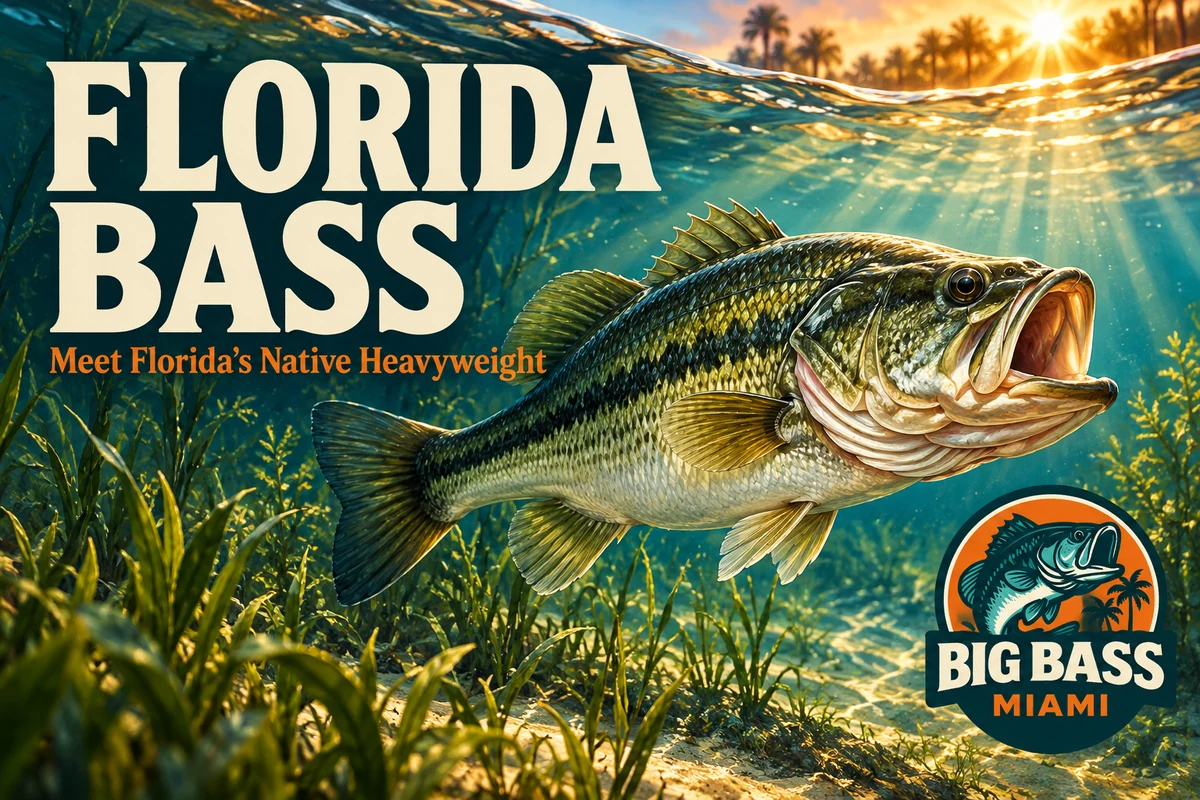
Look for an olive-green back, lighter belly, a dark irregular band along the side, and a large mouth. Together, those features help you recognize the familiar bucketmouth shape, but they do not reliably separate a Florida bass from a largemouth bass. In fact, the two can look so similar that a photograph alone may not settle the identification.


Habitat: Look at the Whole Edge
Across Florida, these bass use freshwater lakes, ponds, rivers, and canal systems. Within those waters, vegetation, submerged wood, changes in depth, and available forage all help shape useful habitat. In particular, an edge is worth observing because it brings different conditions together: open water beside grass, shade beside sunlight, or a shallow shelf beside deeper water.
For a bank angler, the first useful skill is patience. Before you cast, watch the water. Then check access, shoreline footing, and how you could land a fish without damaging vegetation or putting yourself in a difficult position.
Feeding and Fishing Approaches
Florida bass are predators that feed on fish and other available prey. Therefore, understanding what is present in the water is more useful than assuming one lure will always work. For example, soft plastics can help you explore vegetation and openings. In more open water, a moving bait can help you cover ground. In practice, adjust your retrieve as you learn what the fish respond to.
First, choose a manageable presentation. Then pay attention to where you get bites or touch cover. As you adjust, change one thing at a time. In the end, the aim is to learn the water, even on a day when no fish cooperate.
Why Florida Bass Matter
Florida bass are celebrated for their trophy potential. However, a fishery needs more than large fish. For a fishery to thrive, healthy habitat, good water quality, forage, and careful angling all contribute to the experience. For that reason, at Big Bass Miami the small catches and quiet observations belong beside the memorable giants.
Respect the Fish and the Water
First, plan where you’ll land and release the fish. Once you land a fish, keep handling brief, support the fish appropriately, and take discarded line and litter home. Explore the Bass Philosophy for the principles behind Big Bass Miami. Before fishing, check FWC’s current freshwater regulations and any rules specific to the water you visit.
Keep Learning
For comparison, look at largemouth bass, explore peacock bass, or, for an overview, return to Understanding Bass.
Reference: FWC’s explanation of Florida bass as a distinct species.
Explore This Learning Library
Get to know Florida bass, recognize useful habitat clues, and choose a practical approach for your next trip. Use these suggestions as starting points and adjust to what you observe.
Florida Bass Reference
| Topic | Know the Fish | Find the Fish | Fish for It |
|---|---|---|---|
| Florida Bass | Under current FWC naming, Florida bass is a native black bass called Micropterus salmoides. However, older sources often use Micropterus floridanus. | In South Florida, start with freshwater canals, lakes, and ponds. However, appearance alone may not distinguish it from largemouth bass. | Instead, choose your presentation based on the cover, depth, and water clarity rather than the fish’s size or name. |
| Habitat & Cover | Cover offers places to shelter and ambush prey; a depth change gives fish access to a different part of the water column. | For example, look for vegetation edges, shade, wood, and steep banks with nearby deeper water. | First, work the outside edge. Then place controlled casts closer to cover. For more detail, explore Bass Environments. |
| Feeding Activity | Baitfish and other available prey influence where bass spend time. For example, visible activity gives you something concrete to investigate. | For example, watch for small fish scattering, surface disturbances, and movement beside vegetation. | First, try a moving lure to explore an area. Then slow down around promising cover. As you adjust, change one part of the presentation at a time. |
Bait, Lures & Changing Conditions
| Topic | Know the Fish | Find the Fish | Fish for It |
|---|---|---|---|
| Soft Plastics & Artificial Lures | For example, plastic worms, jigs, and moving lures offer different ways to work cover and depth. | In particular, match your lure to openings in vegetation, bottom conditions, and the space available to retrieve it. | Work a worm slowly with pauses when fish are reluctant. On the other hand, a moving bait can help you explore open edges. If it collects too much grass, adjust your approach. |
| Live Bait | Live shiners are an established black-bass bait choice. While you fish, keep the bait lively and watch your presentation. | For example, look for manageable vegetation edges or open pockets near cover. | Present legal live bait where you can watch your line or float. That way, you can respond promptly when a fish takes the bait. |
| Changing Conditions | For instance, a cold front, a shift in light, or a change in water level can affect how a familiar spot fishes. | For instance, compare exposed banks with sheltered cover and nearby depth changes. | After a change, compare slower and faster retrieves. Also, use the Seasons & Conditions guide to plan weather protection and safe access. |
Related Lessons from the Journal
Explore stories and lessons connected to this subject.
-

Still Chasing My First 10-Pound Bass
A childhood bass caught beside Tamiami Trail still fuels Peter Cardenas’s pursuit of his first 10-pounder, more than 40 years later on the same…
-

Welcome to Big Bass Miami
Meet Peter Cardenas and discover the stories, fishing lessons, and respect for Florida’s waters behind Big Bass Miami.