

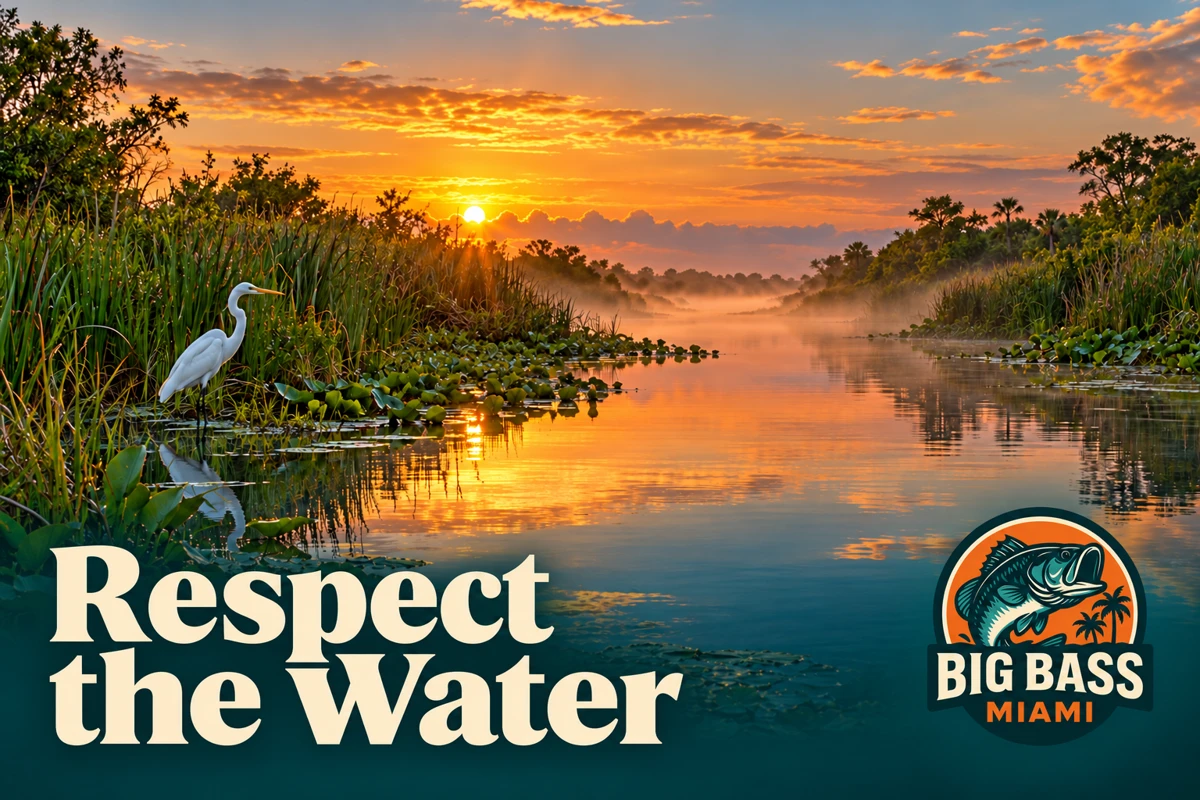
Some days, the best part of fishing happens before the first bite. The canal settles down. You notice the grass along the bank, a bird working the shoreline, and the stretch of water ahead.
That’s worth taking care of.
Respecting the water means thinking about what we bring, what we leave behind, and how we treat the places that welcome us back.
Change Starts on Our Own Shoreline
Many of us have walked past a bottle or wrapper and thought it was someone else’s problem. Some of us have left trash behind ourselves.
We can acknowledge those mistakes and choose a better habit today. Taking our own trash—and safely collecting a little extra—makes the next visit better for everyone.
We don’t have to wait for someone else to start.
Every Fishing Spot Deserves Care
A neighborhood canal deserves the same respect as a quiet stretch of the Everglades. Both support wildlife and give people a place to enjoy fishing.
Whether the bite is on or you haven’t had a strike all morning, taking your trash home is part of finishing the trip.
Bring a Bag. Take Your Trash.
Pack a small trash bag with your tackle. Put empty bottles, food wrappers, bait packaging, and discarded tackle scraps away as you go.
Secure your trash so it cannot blow into the water. Before leaving, check beside your tackle bag, around benches, and along your route back to the car.
Pick up extra litter only when it is safe. Leave sharp, hazardous, or unidentified waste alone and report it to the site manager.

Watch Where You Step
The shoreline is more than a place to stand. Look before setting down your gear or walking through vegetation.
Use established access points when available. Often, other anglers have already worn a narrow path through the grass. When access is permitted and the route is safe, follow that existing path instead of creating another one.
Avoid trampling more shoreline plants or cutting vegetation to open a casting lane. If the bank looks unstable or the approach feels unsafe, find another place to cast.
Getting closer to a fish isn’t worth damaging the shoreline—or getting hurt.
Share the Bank with Respect
Follow posted restrictions, respect private property, keep paths clear, and give other anglers room.
Some productive spots have restricted access, and good fishing can make those signs tempting to overlook. Fishing with a resident may provide permission, but don’t assume an invitation overrides every restriction. Check what is allowed and who can grant access.
We’ve all heard stories about bending the rules to reach a good spot. The Bass Philosophy asks us to make responsible choices. If we choose otherwise, the responsibility and consequences remain ours.
A quick hello, a little space, and a clean bank help make shared fishing areas more welcoming.
Make One Last Look Part of the Trip
Before heading home, ask: Did I leave anything behind?
Check for trash, loose line, and forgotten gear. Take what you brought. If you safely collected something extra, even better.
The next cast starts with the water we leave behind today.
Make the Bass Philosophy a part of how you care for the water.
Tight Lines and Good Times!