
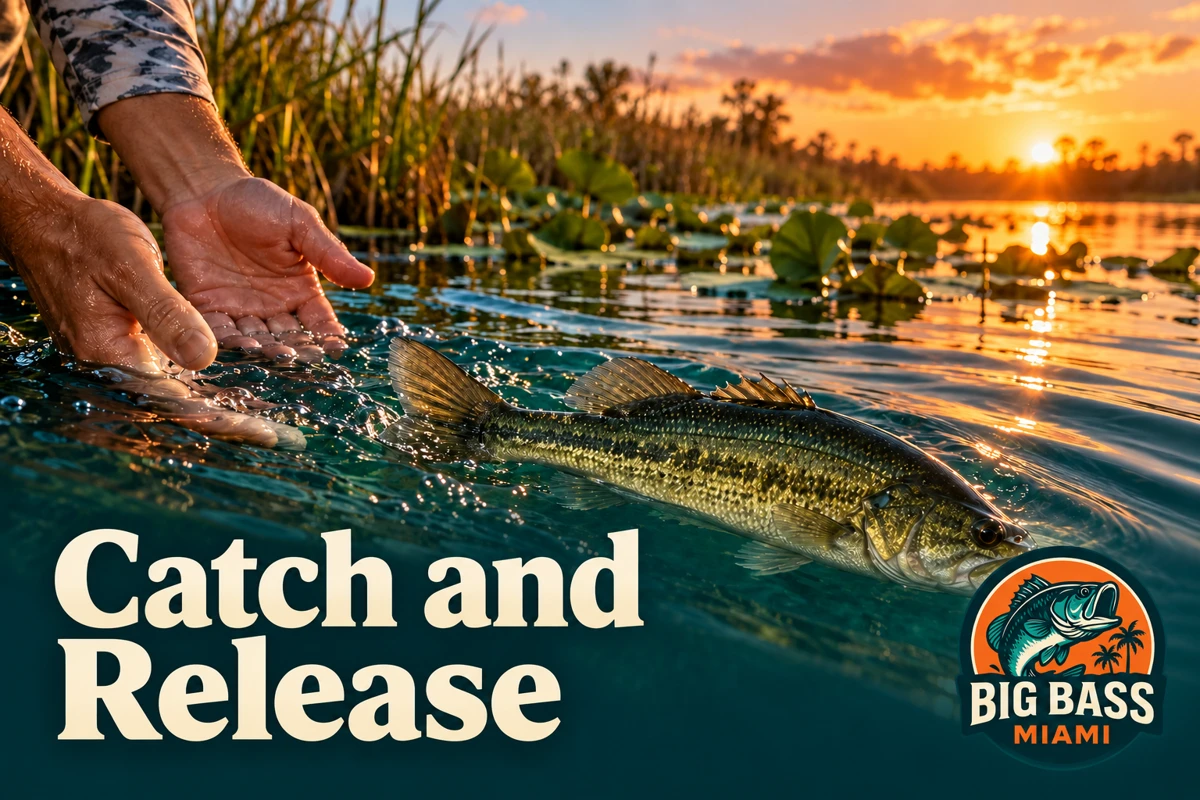
There’s a moment after a good catch when the excitement gets quiet. The fish is back in the water, your hands open, and you watch it swim away.
That moment belongs in the story, too.
Catch and release asks us to appreciate a fish beyond the photograph—and prepare for its return before making the first cast.
Give the Next Angler a Chance
A healthy fish returned to the water can continue growing, contribute to future generations, and perhaps become another angler’s memorable catch.
Thoughtful release connects today’s fishing with tomorrow’s possibilities: children learning to cast, newcomers discovering the sport, and experienced anglers still chasing that unforgettable bite.
Alongside healthy habitat, clean water, and responsible harvest, careful release helps us care for the fisheries we enjoy.
Start with the Return in Mind
Use tackle suited to the fish and cover so the fight does not become unnecessarily prolonged. Keep landing tools, pliers, cutters, and your camera ready.
Choose a safe place to land and release the bass. Think about high banks, slippery footing, and nearby wildlife before a fish is on the line.
Preparation makes a quick, careful release easier.
Protect the Fish During Handling
Wet your hands before touching the fish. Avoid dry towels, grass, pavement, and hot decks, which can damage its protective slime coat.
If holding a bass horizontally, support its belly with a wet hand rather than levering its weight against the jaw. Keep fingers away from its eyes and gills.
A wet, purpose-built weighing bag can support a brief weighing, but a little water in the bottom does not replace keeping the fish submerged.
Treat air exposure like a game clock. Aim to finish out-of-water handling in under 30 seconds, including photographs and weighing. Skip extra steps when necessary.

Know When to Stop Pulling
A hook near the lip and one lodged deep in the throat require different decisions.
If a deeply swallowed hook cannot be removed easily, avoid digging or forcing it out. Cut the line as close to the hook as you can safely reach and leave it in place.
Before future casts, consider flattening hook barbs or using barbless hooks to make removal easier. Careful handling improves the fish’s chances; it does not guarantee survival.
Give the Bass a Gentle Return
Lower the fish gently into the water from a safe position. Keep it upright and, if support is needed and safe to provide, allow it to regain balance and swim away under its own power.
Don’t throw it or pull it backward through the water.
Keep watching your surroundings. If an alligator approaches or shows interest in the catch, stop fishing and move away. Never enter unsafe water or lose awareness of wildlife while concentrating on a release.
Respect the Limits. Protect the Future.
Get Your Fishing License. Support the Fishery.
A Florida freshwater fishing license is generally required to fish for bass—even when you release every catch—unless an exemption applies. License fees support fisheries management and help fund conservation work, including habitat restoration and fish stocking through Florida’s fisheries and Sport Fish Restoration programs.
Visitors from another Florida town follow Florida residency rules; being “from out of town” does not automatically make you a nonresident. Out-of-state visitors age 16 and older generally need a Florida license. Another state’s fishing license is not valid here. Exemptions include children under 16 and qualifying Florida residents age 65 or older; the resident senior exemption does not extend to visiting nonresident seniors.
Do Visitors Have to Buy a Full Year?
No. FWC still lists nonresident freshwater licenses for 3 days ($17), 7 days ($30), and one year ($47), before applicable additional fees. Effective November 7, 2025, nonresident 3-day and 7-day recreational fishing licenses are sold only in person at participating license agents or tax collectors’ offices—not online or by phone. An annual license remains an online option.
FWC visitor requirements · Freshwater license options and fees · Where to buy a license · Check exemptions · How fishing supports conservation
Florida’s General Bass Harvest Limits
- Black bass, including Florida and largemouth bass: five per angler per day, combined across black bass species. Only one may measure 16 inches or longer in total length. Florida and largemouth bass have no general statewide minimum length.
- Butterfly peacock bass: two per angler per day; only one may measure 17 inches or longer in total length.
- Possession: the general freshwater game-fish possession limit is two days’ bag limit.
Special waterbody rules and species-specific restrictions can override these general limits. Having a license—or qualifying for an exemption—does not waive harvest rules. Check the current rules before fishing; a bag limit is a maximum, not a target.
Check current FWC bag and length limits · Check water-specific freshwater regulations
Responsible harvest has a place in fishing, too. If keeping fish, follow current size, daily bag, possession, and water-specific limits.
A limit is a ceiling, not a goal. Take only what you intend to use. Avoiding overharvest helps preserve fishing opportunities for future generations.
Personally, I prefer releasing my canal catches and choosing ocean fish for the table. But freshwater or saltwater alone does not establish whether a fish is safe to eat.
Check Florida’s consumption advisories for the species and waterbody, plus local health warnings. A fish being legal to keep does not automatically mean it is advisable to eat.
Make the Bass Philosophy a Part of Every Release
Some of us once thought the job ended when we landed the fish. We can choose a more thoughtful routine with the next catch.
Show a friend or child that the release deserves attention, too. Our example can help make care for the fish part of the sport’s shared traditions.
Make the Bass Philosophy a part of every release.
Tight Lines and Good Times!